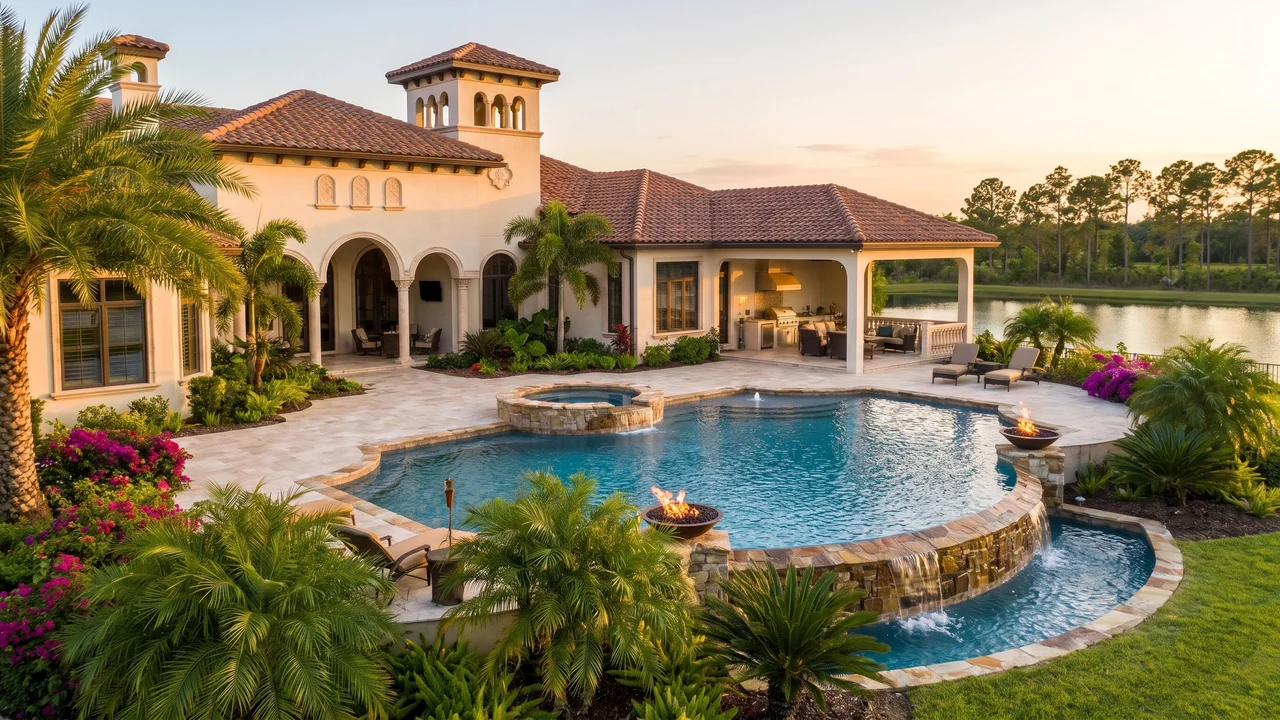

Pool guide
Plan your custom pool.
Practical answers for anyone planning a custom concrete pool in South Florida. General guidance, not a substitute for local rules or a site-specific plan.
Planning
Where should I start?
Start with how you want to use the pool: swimming laps, lounging, entertaining, or cooling off. That decides shape, depth and extras far more reliably than any catalogue. Then note your yard dimensions, where the house and sun sit, and what you want to see from inside.
How big should a pool be?
Size follows use and space. Leave room around the water for circulation, furniture and shade, and remember the deck is part of the design. If you are unsure, say so on the planning form and we will work it out together.
Customization
What can be customized in a concrete pool?
Dimensions, shape, depth and finish are all open, along with decking, coping, spas, tanning ledges, lighting and water features. Concrete is formed on site, so the pool follows your design rather than a preset mould.
What is a tanning ledge?
A broad, shallow shelf set just below the waterline, made for lounge chairs, sun-soaking and shallow play. It is one of the most-used parts of many pools.
Can a spa be part of the pool?
Yes. A spa can be attached to the pool, or raised with water spilling into it. Which suits you depends on your space and how you like to use it.
Finishes
How do I choose a pool finish?
The interior finish affects the colour of the water, the feel underfoot and how the pool looks over years of use. Look at samples in daylight, next to your deck and coping materials, and compare colours when wet rather than dry.
Should decking and coping match?
They do not have to match, but they should agree on tone and texture. Coping is the edge you touch, grip and sit on, so comfort in strong sun is worth considering alongside looks.
Maintenance
What does a pool need after it is built?
Every pool needs regular water testing and balancing, filtration, skimming and brushing. Interior finish, equipment and features each have their own care routines. Ask for care guidance for the specific finish and equipment you choose.
Do water features and lighting change upkeep?
They add equipment and components to look after. Many owners find the trade is worth it, but it is better to decide with eyes open than be surprised later.
Access
Why does site access matter?
Excavation and concrete construction need room for equipment, materials and crews to reach the build area. Narrow gates, overhead lines, fences, trees and neighbouring property can change how a pool is built, so note them when you plan.
Permitting
Does a pool need a permit?
In Florida, residential pools are generally subject to local permitting and safety rules, and requirements differ between cities, towns and counties. Barrier and safety requirements apply too. Check with your local building department and homeowner association early.
Will my HOA or neighbourhood have rules?
Possibly. Some communities have design review or setback requirements. Raise it before you finalize a design, since it can affect shape, placement and materials.
Cost factors
What affects the cost of a custom pool?
Size, depth, shape complexity, interior finish, decking and coping materials, spa and ledge additions, lighting, water features, site access, soil and groundwater conditions, and permitting all play a part. Because every pool is custom, a fair figure only comes after a plan exists.
Can you tell me a price now?
Not without knowing what you want to build. The planning form is the quickest way to describe your pool so it can be discussed in concrete terms.